
A business has negative working capital when it currently has more liabilities than assets. This can be a temporary situation, such as when a company makes a large payment to a vendor. However, if working capital stays negative for an extended period, it can indicate that the company is struggling to make ends meet and may need to borrow money or take out a working capital loan.

Incremental Net Working Capital Formula (NWC)
Software companies generally tend to have a positive change in working capital cash flow because they do not have to maintain an inventory before selling the product. It means that it can generate revenue without increasing current liabilities. The net working capital (NWC) is the difference between the total operating current assets and operating current liabilities. You can calculate working capital by taking the company’s total amount of current assets and subtracting its total amount of current liabilities from that figure.
- ” There are three main ways the liquidity of the company can be improved year over year.
- This means that Paula can pay all of her current liabilities using only current assets.
- It shows how efficiently a company manages its short-term resources to meet its operational needs.
- In this scenario, the company’s net working capital decreases, signaling potential cash flow constraints and liquidity challenges.
- Conversely, a large decrease in cash flow and working capital might not be so bad if the company is using the proceeds to invest in long-term fixed assets that will generate earnings in the years to come.
Free Financial Modeling Lessons
A negative amount indicates that a company may face liquidity challenges and may have to incur debt to pay its bills. Generally, yes, if a company’s current liabilities exceed its current assets. This indicates the company lacks the short-term resources https://www.bookstime.com/ to pay its debts and must find ways to meet its short-term obligations. However, a short period of negative working capital may not be an issue depending on the company’s stage in its business life cycle and its ability to generate cash quickly.
- For example, items such as marketable securities and short-term debt are not tied to operations and are included in investing and financing activities instead.
- Moreover, it will need larger warehouses, will have to pay for unnecessary storage, and will have no space to house other inventory.
- Since Paula’s current assets exceed her current liabilities her WC is positive.
- They could have been invested in more productive assets, e.g., investments, or additional PPE for expansion.
- The risk is that when working capital is sufficiently mismanaged, seeking last-minute sources of liquidity may be costly, deleterious to the business, or, in the worst-case scenario, undoable.
How is change in working capital calculated?
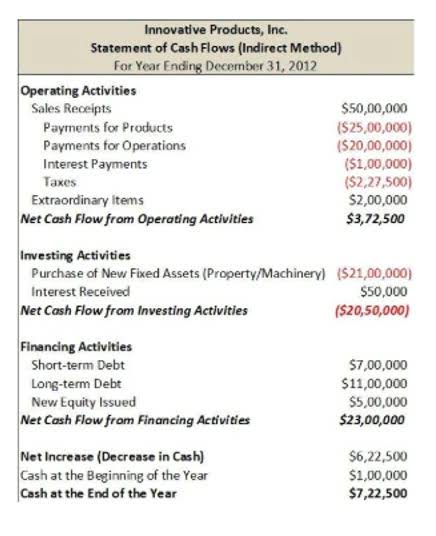
Working capital is calculated by taking a company’s current assets and deducting current liabilities. For instance, if a company has current assets of $100,000 and current liabilities of $80,000, then its working capital would be $20,000. Common examples of current assets include cash, accounts receivable, and inventory. Examples of current liabilities include accounts payable, short-term debt payments, or the current portion of deferred revenue.
Balance Sheet Assumptions

Scrutinize the workflow to identify processes suitable for automation, thereby enhancing overall efficiency and contributing to improved working capital management. Thus, both are equally important while evaluating the company’s financial condition. Shaun Conrad is a Certified Public Accountant and CPA exam expert with a passion for teaching. After almost a decade of experience in public accounting, he created MyAccountingCourse.com to help people learn change in net working capital accounting & finance, pass the CPA exam, and start their career. A change in purchasing practices can also lead to changes in working capital.
- Alternatively, it could mean a company fails to leverage the benefits of low-interest or no-interest loans.
- In the final part of our exercise, the incremental net working capital (NWC) will be calculated and expressed as a percentage.
- In our hypothetical scenario, we’re looking at a company with the following balance sheet data (Year 0).
- Therefore, the impact on the company’s free cash flow (FCF) is +$2 million across both periods.
- For example, if a company has $100,000 in current assets and $30,000 in current liabilities, it has $70,000 of working capital.
The balance sheet organizes assets and liabilities in order of liquidity (i.e. current vs long-term), making it easy to identify and calculate working capital (current assets less current liabilities). Net working capital is the difference between a business’s current assets and its current liabilities. Net working capital is calculated using line items from a business’s balance sheet. Generally, the larger your net working capital balance is, the more likely it is that your company can cover its current obligations. Positive working capital generally means a company has enough resources to pay its short-term debts and invest in growth and expansion.

- In conclusion, our hypothetical company’s incremental net working capital (NWC) rate implies that approximately 20% of its net revenue is tied up in its operations per dollar of incremental revenue.
- A fall in the amount of this capital is detrimental to the entity and leads to doubt about the efficiency of the management.
- Working capital, often referred to as the lifeblood of a business, represents the funds available for day-to-day operations.
- A current ratio of more than one indicates that a company has enough current assets to cover bills that are coming due within a year.
- The higher the ratio, the greater a company’s short-term liquidity and its ability to pay its short-term liabilities and debt commitments.
- Net working capital is most helpful when it’s used to compare how the figure changes over time, so you can establish a trend in your business’s liquidity and see if it’s improving or declining.
Understanding changes in cash flow is also important if you are applying for a small business loan. Lenders will often look closely at a potential borrower’s working capital income summary and change in working capital from quarter-to-quarter or year-to-year. Next, compare the firm’s working capital in the current period and subtract the working capital amount from the previous period.